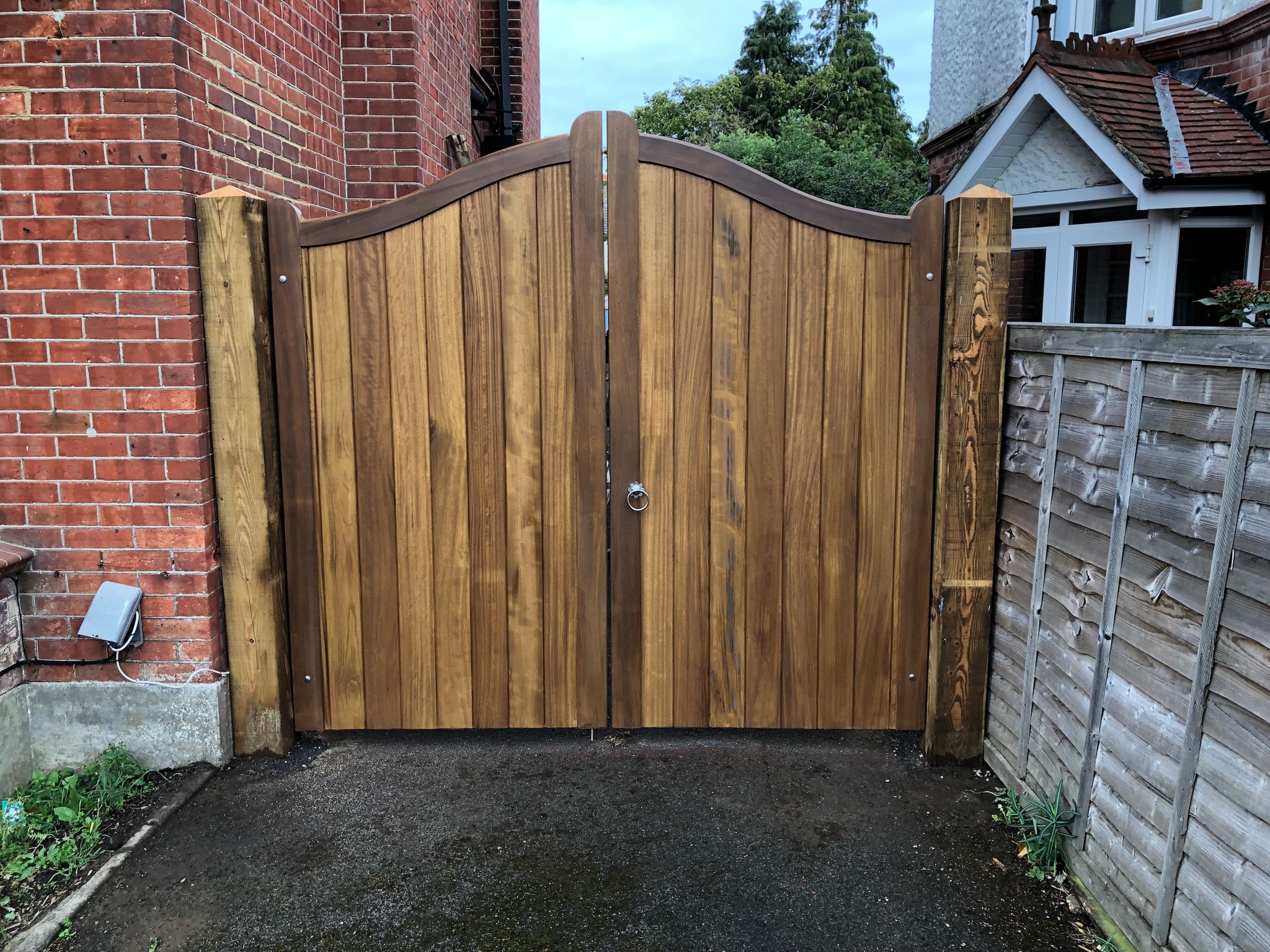











Accoya Gates
Accoya is an excellent choice for bespoke wooden gates, combining the natural appearance of timber with exceptional durability and stability. It is sustainably sourced softwood modified through a specialist acetylation process, improving its resistance to moisture, rot, fungal decay, warping and twisting.
Its dimensional stability makes Accoya particularly suitable for large driveway gates, helping them retain their shape and alignment throughout changing UK weather conditions. It can be painted, stained or left to weather naturally to an attractive silver-grey finish. Accoya also accepts finishes extremely well, making it suitable for traditional and contemporary gate designs.
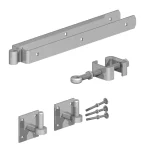
The main disadvantage is its higher initial cost compared with treated redwood and some hardwoods. It is also not entirely maintenance-free, as painted or stained gates require occasional cleaning and refinishing. Suitable corrosion-resistant fixings must also be used.
Overall, Accoya is a premium, dependable timber offering lasting performance, reduced movement and excellent long-term value.

Accoya Vs Redwood Vs Oak Vs Iroko Gates
Accoya
Pros: Accoya is exceptionally durable and stable. In addition, it offers excellent resistance to moisture, rot, swelling and warping. It also accepts paint and stain well and, therefore, requires very little maintenance.
Cons: However, Accoya is more expensive than redwood or does not offer the naturally rich grain associated with traditional hardwoods. Furthermore, stainless-steel ironmongery and fixings must be used because its residual acetic acid can corrode unsuitable metals.
Redwood
Pros: Redwood is affordable, versatile and attractive. Moreover, it is easy to work with and accepts paints, stains and protective treatments well. As a result, it suits many different gate designs and budgets.
Cons: Nevertheless, redwood requires regular maintenance. It is also more susceptible to rot, movement and warping than Accoya or hardwood alternatives.
Oak
Pros: Oak is strong, durable and full of natural character. In particular, its distinctive grain structures creates a premium chatoyancy, and traditional appearance.
Cons: On the other hand, oak is heavy and relatively expensive. Additionally, it can naturally move, split or develop surface cracks as it weathers. Stainless-steel ironmongery and fixings are also essential because the tannic acid in oak can react with unsuitable metals, causing corrosion and dark staining.
Iroko
Pros: Iroko is a durable tropical hardwood with excellent resistance to moisture, decay and demanding outdoor conditions. Furthermore, its rich colour and attractive grain provide a premium finish.
Cons: However, Iroko is more expensive than redwood and may gradually weather to silver-grey if left untreated. Additionally, its natural oils can make painting and finishing more challenging.
Overall, Accoya is best for durability and stability, while Redwood is the most affordable option. Meanwhile, Oak provides traditional character, whereas Iroko is ideal for customers seeking a durable exotic hardwood.