

Description
13mm Galvanised Clout Nails
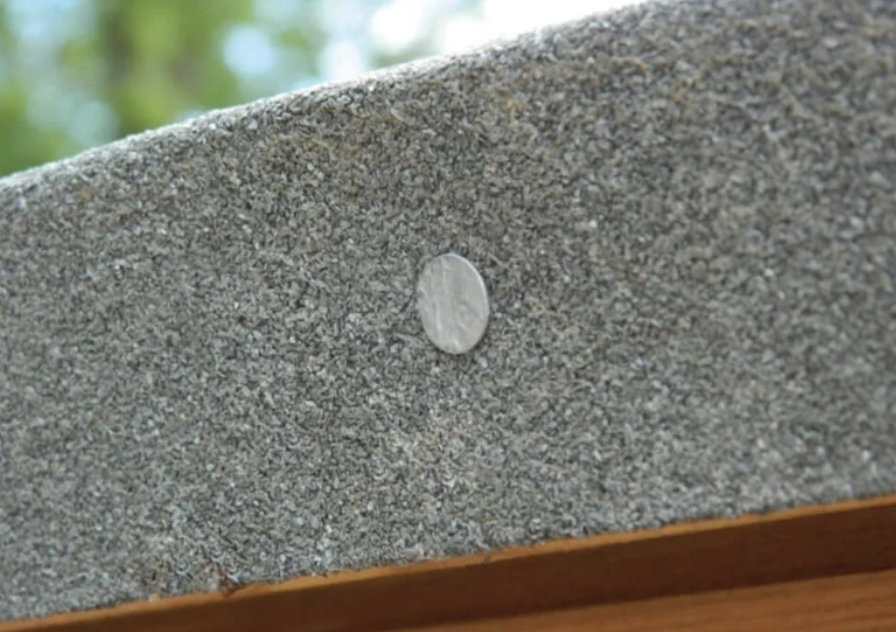
Our 13mm galvanised clout nails provide a practical and reliable way to secure roofing felt and other thin materials to timber. Their short length makes them particularly useful when a project requires a compact fixing. Furthermore, you can choose from 0.5kg, 1kg and 2.5kg bags, whether you need nails for a small repair or a larger roofing project.
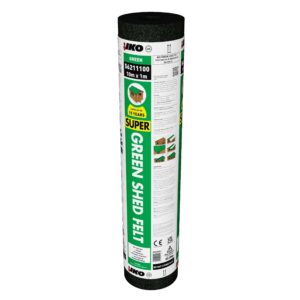
Complementing our Roofing Felt 10m Rolls.
Why Do 13mm Galvanised Clout Nails Have Large Heads?
Unlike a standard nail, a clout nail features a broad, flat head. This larger head spreads pressure across a wider area and holds thin materials firmly against the timber. As a result, the material is less likely to tear, split or pull over the fixing.
Therefore, clout nails work particularly well with roofing felt, lightweight membranes, building paper and other flexible sheet materials.
Standard Nail |
Clout Nail |
|---|---|
| Smaller contact area | Broad contact area |
| Greater risk of pulling through thin material | Helps clamp material securely |
| Pressure concentrated around the fixing | Pressure distributed across a wider area |
The 13mm length works well when a short fixing is required. However, always check that the nail will penetrate deeply enough into the timber to hold the chosen material securely.
What Does Galvanised Mean?
Galvanising adds a protective zinc coating to the surface of the steel nail. Firstly, this coating creates a physical barrier that limits contact between the steel, moisture and oxygen. Consequently, it slows corrosion and helps the nail last longer than an untreated bright-steel fixing.
In addition, zinc provides sacrificial protection. If the coating suffers a small scratch, the surrounding zinc corrodes before the exposed steel. Therefore, the coating can continue to protect the nail even after minor surface damage.
Common Applications
- Fixing roofing felt to timber
- Securing lightweight membranes
- Attaching thin sheet materials
- General roofing and repair work
- Fixing suitable building papers and coverings
How Are 13mm Galvanised Clout Nails Made?
Manufacturers begin by cleaning the steel nails to remove oil, dirt, rust and surface scale. This preparation plays an important role because zinc needs a clean surface to form a secure and even bond.
Next, the manufacturer coats the nails with zinc. The precise method depends on the product specification:
- Hot-dip galvanising immerses the nails in molten zinc. This process generally creates a thicker and slightly more textured coating, which offers greater protection in exposed outdoor conditions.
- Electro-galvanising uses an electrical current to deposit zinc onto the steel. In comparison, this process usually creates a thinner, smoother and more uniform finish.
After applying the coating, the manufacturer cools or dries the nails and then checks the coverage and finish. Ultimately, the completed zinc layer protects the steel by creating both a physical barrier and a sacrificial coating.
However, the word “galvanised” does not identify the coating method or thickness on its own. Therefore, you should confirm the precise galvanising specification with the manufacturer before making claims about durability or suitability for prolonged outdoor exposure.
Galvanised clout nails offer better corrosion resistance than untreated bright-steel nails. Nevertheless, galvanised steel is not completely rustproof, and its performance will depend on the coating thickness, surrounding conditions and installation.
For example, coastal environments, permanently damp locations and contact with corrosive materials can place greater demands on the fixing. In these situations, a suitably graded stainless-steel nail may provide a better option.
Common Applications
- Fixing roofing felt to timber
- Securing lightweight membranes
- Attaching thin sheet materials
- Completing general roofing repairs
- Fixing suitable building papers and coverings
Available bag sizes: 0.5kg, 1kg and 2.5kg.
For more information on galvanising methods check out the Galvanisers Association for more!

Hot Dipped Galvanising Process